
Beschrijving
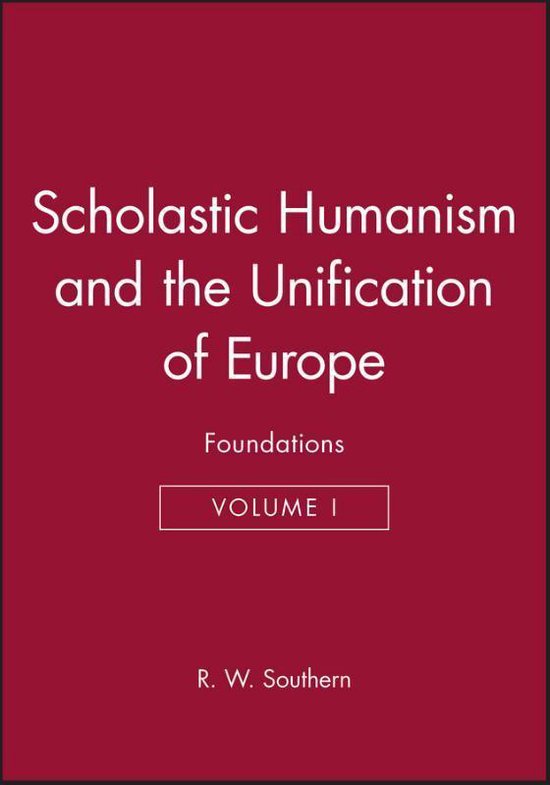
The first of three volumes which look at the history of scholastic humanism. This volume is concerned with the years between 1100 and 1160, when the main lines of scholastic thought were laid down and its agenda established.
‘This is the most important book in recent decades on the twelfth-century renaissance and its significance.’
— Norman F. Cantor, New York Univeristy
‘The book is a model of how to combine forceful argument with elegant presentation, and is going to be an important vehicle for conveying an understanding of medieval thought and the Christian enterprise.’
—Theology
‘Because it is so clear and accessible, it is just what teachers of medieval culture (whether in Europe or America) have been looking for. But Richard Southern is intending much more here than a superb student text. [This] is a book for everyone interested in the origins of modern western culture and the history of knowledge.’
—Michael Clanchy, University College, London
At the beginning of the twelfth century a group of scholars began an enterprise of unprecedented scope. Their intention was to produce a definitive body of knowledge that would be as perfect as humanity’s fallen state permits, and which would provide a view of God, nature, and human conduct, promoting order in this world and blessedness in the next. Scholastic Humanism and the Unification of Europe reconsiders this enterprise, and its long-term effects on European History.
The whole work will be in three volumes. This first is concerned with the beginnings, in the years between 1060 and 1160, when the main lines of scholastic thought were laid down and its agenda established. The book explores the social, intellectual, and political conditions behind the establishment of the new system in the great schools of learning in France and Italy, and the rewards that attracted experts who could both administer the system and make it known and acceptable to the generality of people whose lives were affected by it. Scholastic Humanism and the Unification of Europe will be a work of seminal importance for the understanding of the civilization of the Middle Ages, and of the evolution of modern European societies.
to produce a definitive body of knowledge that would be as perfect as humanity’s fallen state permits, and which would provide a view of God, nature, and human conduct, promoting order in this world and blessedness in the next.
Beoordelingen
Er zijn nog geen beoordelingen.