
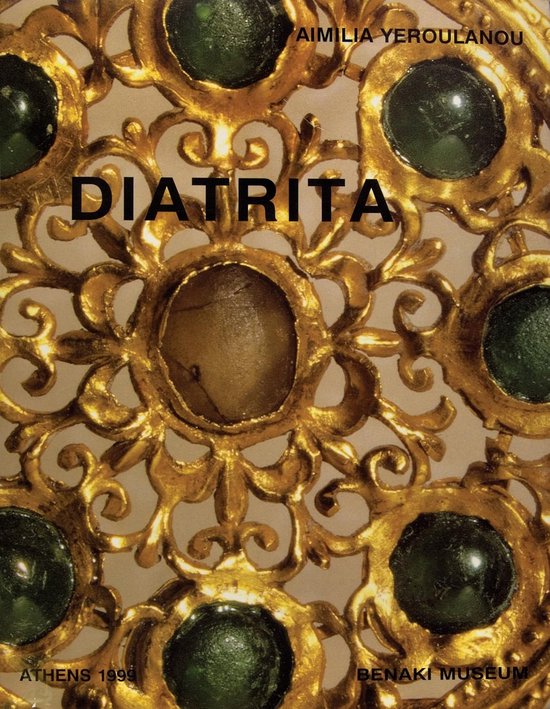
Beschrijving
This monograph examines the refined art of diatrita — openwork gold jewellery, also known as opus interrasile — produced between the 3rd and 7th centuries CE. Aimilia Yeroulanou presents these pieces not only as exquisite ornaments but as evidence of highly developed craftsmanship within the late Roman and early Byzantine world. Through detailed documentation and high-quality illustrations, the book shows how pierced-work jewellery functioned as a marker of status, identity and cultural exchange.
The central part of the study focuses on technique and style: the methods used to cut openwork patterns, the composition of alloys, and the evolution of decorative motifs. Geometric designs, vegetal scrolls, birds and other symbolic elements reveal shifting aesthetic preferences over time, as well as changing religious and social meanings. Yeroulanou also examines workshop practices and regional variations, highlighting how certain stylistic traits travelled across the Mediterranean through trade routes and artisan networks.
Finally, the book addresses the archaeological and museological dimensions of these jewels. It discusses excavation contexts, provenance issues, and the challenges of preserving delicate gold pieces. By placing the objects within broader historical and artistic frameworks, the study underscores the importance of diatrita as a key form of late antique and early Byzantine luxury art. Richly illustrated and meticulously researched, it serves as an essential reference for art historians, jewellery specialists and museum professionals.




Beoordelingen
Er zijn nog geen beoordelingen.